
Korn Allianz Parque – São Paulo, Brazil


frontend.pacotes.mais_info
Korn is an American band formed in 1993 in Bakersfield, California, widely recognized as one of the pioneers of the nu metal genre. The band played a fundamental role in shaping and popularizing this style during the 1990s and early 2000s. Korn was formed from the merger of members from the bands L.A.P.D. and Sexart, with the arrival of vocalist Jonathan Davis being a key moment in the creation of the group’s unique sonic identity. The classic lineup included Jonathan Davis on vocals, James "Munky" Shaffer and Brian "Head" Welch on guitars, Reginald "Fieldy" Arvizu on bass, and David Silveria on drums.
From the very beginning, Korn’s sound stood out for its use of seven-string guitars tuned down to lower tones, heavy basslines, and aggressive percussion, creating a dense and dark atmosphere. Jonathan Davis’s voice brought an emotional and visceral approach, with lyrics that dealt with deeply personal themes such as abuse, alienation, depression, addiction, and psychological trauma. This brutal honesty and vulnerability were major reasons why the band quickly attracted a dedicated fan base, especially among young people who identified with the feelings of frustration and pain.
Their debut album, released in 1994 and self-titled Korn, wasn’t an immediate commercial success, but it made a significant impact on the underground and alternative scenes. Over time, it became a cult classic and is now considered a cornerstone of nu metal. Songs like “Blind,” “Clown,” and “Faget” showcased not just the band’s aggression, but also a raw emotional depth that set them apart from other heavy bands of the time. The gritty, heavy production, along with their distinct visual style—baggy clothes, dreadlocks, and dark aesthetics—helped shape the nu metal image as a whole.
Commercial success came with their second album, Life Is Peachy (1996), which solidified the band’s place in the charts and on international stages. The sound remained heavy but was more refined, and the lyrical style became even more intense. Their third album, Follow the Leader (1998), marked the band’s commercial peak. It debuted at number one on the Billboard 200 and featured hits like “Freak on a Leash” and “Got the Life.” The success of these tracks, along with their high-rotation music videos on MTV, launched Korn into the mainstream. This album also demonstrated Korn’s ability to blend metal with elements of hip hop and electronic music while maintaining their aggressive and emotional identity.
Following that, the fourth album Issues (1999) kept the band at the top with songs like “Falling Away from Me” and “Make Me Bad,” which continued to explore dark themes through innovative sound arrangements. This period is considered by many to be the band’s creative peak, with sold-out shows, high radio play, and significant awards. However, the weight of fame and internal pressures began to take a toll on the band members.
Throughout the 2000s, Korn underwent significant changes. Drummer David Silveria left the band in 2006, and Brian “Head” Welch departed in 2005, citing religious reasons and struggles with addiction. These departures affected the group’s dynamic and sound. Despite this, the band continued releasing music, including albums like See You on the Other Side (2005) and Untitled (2007), which leaned into more electronic and industrial elements. These records received mixed reviews, but Korn remained active and continued to draw loyal fans.
In 2010, Korn released Korn III: Remember Who You Are, aiming to return to the raw sound of their early years. Produced by Ross Robinson, who had also produced their first two albums, this record emphasized a stripped-down, emotionally charged approach. However, it didn’t reach the same commercial heights as their previous work. In 2011, with The Path of Totality, Korn took an even bolder step into experimentation, blending nu metal with dubstep and collaborating with producers like Skrillex. This creative risk divided fans and critics alike but showed the band’s willingness to evolve and push boundaries.
A turning point came in 2013 when Brian “Head” Welch officially rejoined the band, bringing renewed energy and helping to restore part of the original chemistry. The album The Paradigm Shift marked a more balanced return to their heavy roots while incorporating modern sonic textures. Since then, Korn has maintained a consistent release schedule with albums like The Serenity of Suffering (2016) and The Nothing (2019), both of which were praised for capturing the emotional and sonic intensity of the band’s early years while showcasing lyrical and musical maturity.
Throughout their career, Korn has had a profound impact on modern metal, credited with paving the way for dozens of other artists in the nu metal and alternative metal scenes. While the genre has often been criticized—sometimes labeled immature or derivative—Korn has remained relevant by staying true to an artistic identity centered on authentic emotional expression, and by not being afraid to experiment, fail, and reinvent themselves.
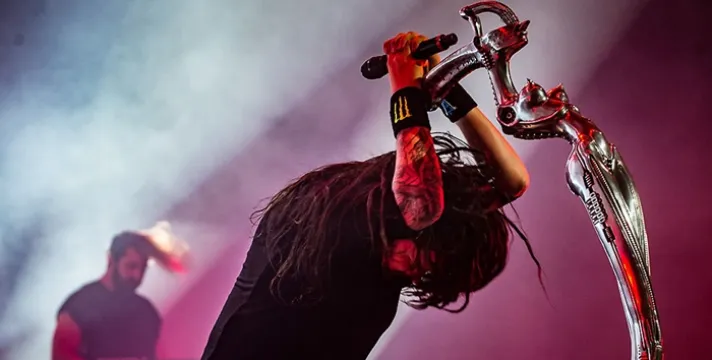
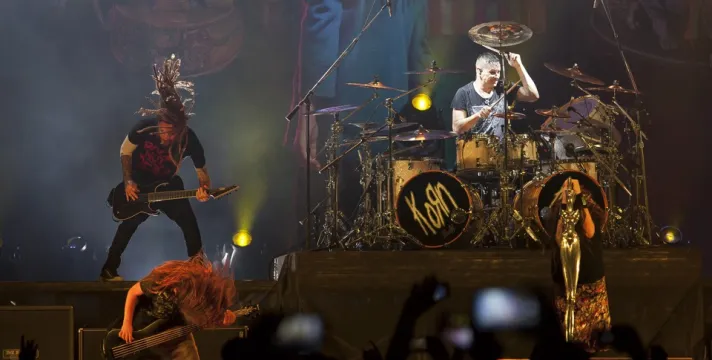
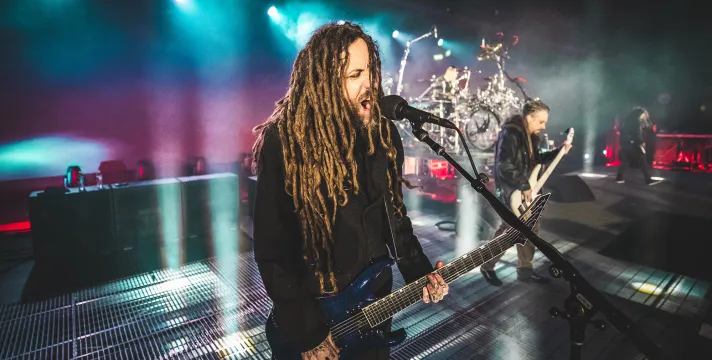
Live performances have always been one of Korn’s greatest strengths. Jonathan Davis, with his intense stage presence, turned their shows into cathartic experiences, where the audience and the band shared a powerful emotional release. Over time, the band’s lyrical themes evolved from personal trauma to deeper reflections on faith, mortality, loneliness, and resilience.
Even after decades of activity, lineup changes, and shifts in the music industry, Korn has remained active and relevant. Their impact goes far beyond record sales or awards—it lies in the way they gave a voice to emotions often ignored in mainstream music and influenced an entire generation of listeners and musicians. In a world where male vulnerability is often suppressed, Korn challenged conventions by showing that pain, fear, and weakness could also be expressed with power and art.
frontend.geral.event_name: Korn
frontend.geral.when_happen: 16/05/2026 ~ 16/05/2026
frontend.geral.where_happen: Allianz Parque – São Paulo, Brazil
Venue
Notes
Korn is an American band formed in 1993 in Bakersfield, California, widely recognized as one of the pioneers of the nu metal genre. The band played a fundamental role in shaping and popularizing this style during the 1990s and early 2000s. Korn was formed from the merger of members from the bands L.A.P.D. and Sexart, with the arrival of vocalist Jonathan Davis being a key moment in the creation of the group’s unique sonic identity. The classic lineup included Jonathan Davis on vocals, James "Munky" Shaffer and Brian "Head" Welch on guitars, Reginald "Fieldy" Arvizu on bass, and David Silveria on drums.
From the very beginning, Korn’s sound stood out for its use of seven-string guitars tuned down to lower tones, heavy basslines, and aggressive percussion, creating a dense and dark atmosphere. Jonathan Davis’s voice brought an emotional and visceral approach, with lyrics that dealt with deeply personal themes such as abuse, alienation, depression, addiction, and psychological trauma. This brutal honesty and vulnerability were major reasons why the band quickly attracted a dedicated fan base, especially among young people who identified with the feelings of frustration and pain.
Their debut album, released in 1994 and self-titled Korn, wasn’t an immediate commercial success, but it made a significant impact on the underground and alternative scenes. Over time, it became a cult classic and is now considered a cornerstone of nu metal. Songs like “Blind,” “Clown,” and “Faget” showcased not just the band’s aggression, but also a raw emotional depth that set them apart from other heavy bands of the time. The gritty, heavy production, along with their distinct visual style—baggy clothes, dreadlocks, and dark aesthetics—helped shape the nu metal image as a whole.
Commercial success came with their second album, Life Is Peachy (1996), which solidified the band’s place in the charts and on international stages. The sound remained heavy but was more refined, and the lyrical style became even more intense. Their third album, Follow the Leader (1998), marked the band’s commercial peak. It debuted at number one on the Billboard 200 and featured hits like “Freak on a Leash” and “Got the Life.” The success of these tracks, along with their high-rotation music videos on MTV, launched Korn into the mainstream. This album also demonstrated Korn’s ability to blend metal with elements of hip hop and electronic music while maintaining their aggressive and emotional identity.
Following that, the fourth album Issues (1999) kept the band at the top with songs like “Falling Away from Me” and “Make Me Bad,” which continued to explore dark themes through innovative sound arrangements. This period is considered by many to be the band’s creative peak, with sold-out shows, high radio play, and significant awards. However, the weight of fame and internal pressures began to take a toll on the band members.
Throughout the 2000s, Korn underwent significant changes. Drummer David Silveria left the band in 2006, and Brian “Head” Welch departed in 2005, citing religious reasons and struggles with addiction. These departures affected the group’s dynamic and sound. Despite this, the band continued releasing music, including albums like See You on the Other Side (2005) and Untitled (2007), which leaned into more electronic and industrial elements. These records received mixed reviews, but Korn remained active and continued to draw loyal fans.
In 2010, Korn released Korn III: Remember Who You Are, aiming to return to the raw sound of their early years. Produced by Ross Robinson, who had also produced their first two albums, this record emphasized a stripped-down, emotionally charged approach. However, it didn’t reach the same commercial heights as their previous work. In 2011, with The Path of Totality, Korn took an even bolder step into experimentation, blending nu metal with dubstep and collaborating with producers like Skrillex. This creative risk divided fans and critics alike but showed the band’s willingness to evolve and push boundaries.
A turning point came in 2013 when Brian “Head” Welch officially rejoined the band, bringing renewed energy and helping to restore part of the original chemistry. The album The Paradigm Shift marked a more balanced return to their heavy roots while incorporating modern sonic textures. Since then, Korn has maintained a consistent release schedule with albums like The Serenity of Suffering (2016) and The Nothing (2019), both of which were praised for capturing the emotional and sonic intensity of the band’s early years while showcasing lyrical and musical maturity.
Throughout their career, Korn has had a profound impact on modern metal, credited with paving the way for dozens of other artists in the nu metal and alternative metal scenes. While the genre has often been criticized—sometimes labeled immature or derivative—Korn has remained relevant by staying true to an artistic identity centered on authentic emotional expression, and by not being afraid to experiment, fail, and reinvent themselves.
Live performances have always been one of Korn’s greatest strengths. Jonathan Davis, with his intense stage presence, turned their shows into cathartic experiences, where the audience and the band shared a powerful emotional release. Over time, the band’s lyrical themes evolved from personal trauma to deeper reflections on faith, mortality, loneliness, and resilience.
Even after decades of activity, lineup changes, and shifts in the music industry, Korn has remained active and relevant. Their impact goes far beyond record sales or awards—it lies in the way they gave a voice to emotions often ignored in mainstream music and influenced an entire generation of listeners and musicians. In a world where male vulnerability is often suppressed, Korn challenged conventions by showing that pain, fear, and weakness could also be expressed with power and art.
frontend.seo.label_end_package
All service offers for the event Korn are provided by companies with years of experience in tourism — whether they are transportation, receptive, or hospitality companies.
Payment methods vary from full payment in cash to installments with or without a credit card, reaching up to 12 equal payments, depending on the start date of your trip.
Purchasing a package for Korn is very simple. The first step is to register on our website, and after validating your account, log in and follow the steps below:
- Step 1: Select the number of passengers.
- Step 2: Choose the type of package — from simple options like BUS TRIP, HOTELS, and SHUTTLE to more complete experiences such as EXPERIENCE packages with multiple services already included.
- Step 3: Select the day(s) of the event, festival, or show you wish to attend.
After selecting your preferences, our system will search and display the available options based on your choices.
Depending on your package selection, additional services may be offered — such as tickets, travel insurance, local transfers, and several other services provided by our partners. These can be added individually for each passenger.
Just follow the steps to fully customize your package and proceed to the final payment stage.
Still have questions about our packages?
Our support channels are always available to help clarify any questions before you complete your purchase: